ADDING another airport to the crowded DMV airspace may NEED study before ops start?
Northern Virginia was the site of a proud announcement of the 1st FAA Part 139 certificate in 53 years. An FAA representative stated that “It’s a huge win for regional connectivity and for the local economy.” All of the speakers quoted recited the thorough FAA SAFETY inspection that the new Washington Manassas Airport facilities had to meet. The skies over Washington are not falling now, but as KHEF attracts new traffic, as Airport Director Rivera hopes it may expand, this spatial construction should be considered now[1].
What was not in the publicity was what might be the impact on the AIRSPACE IN THE WASHINGTON AREA AIRPORTS.
A reasonable line of query may be “does Manassas’ new commercial‑service airspace fit into the Washington metro system.” The region already operates under a tightly integrated, FAA‑managed architecture built for three major airports. Manassas (KHEF) will add complexity, but it plugs into an existing framework designed to absorb reliever‑airport traffic and redistribute demand across IAD, BWI, and DCA.
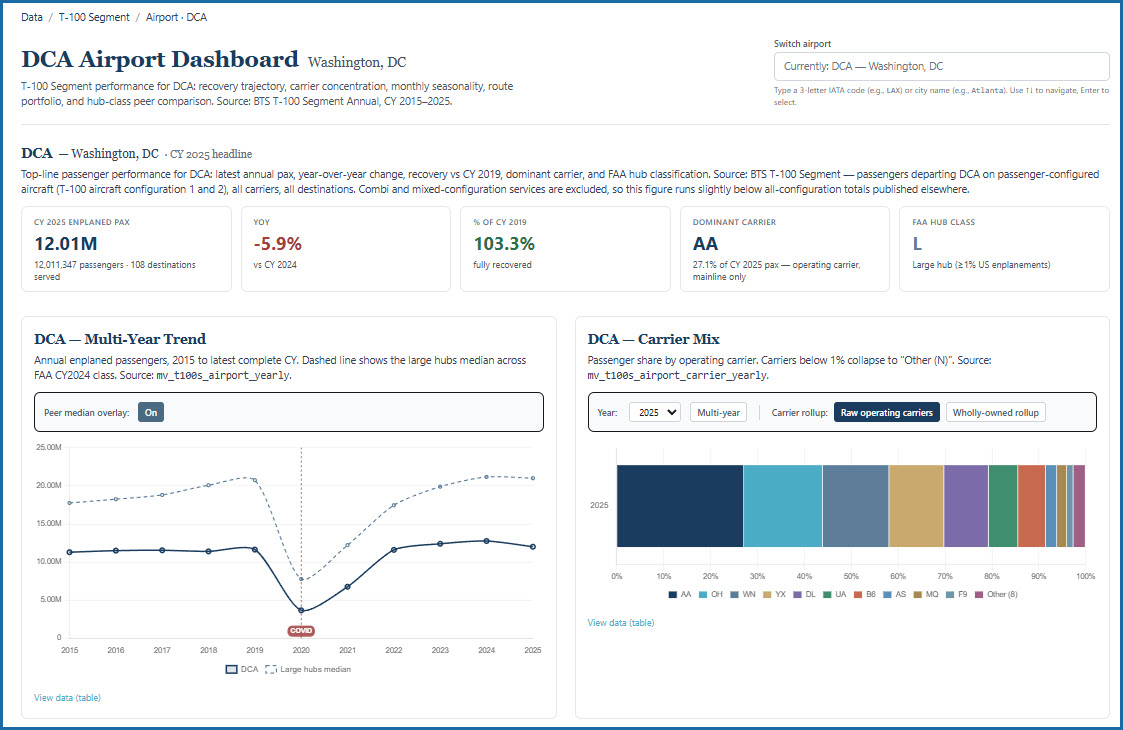
The statistics add to the need to consider the potential impact as the flights are added from KHEF. DCA’s numbers today raise questions-
The current operations are a matter of concern as evidenced by the NTSB’s findings in NTSB Report AIR-26-02 (Accident No. DCA25MA108), issued January 27, 2026:NTSBNTSB. DCA25MA108.aspx)
“An unsustainable airport arrival rate, increasing traffic volume with a changing fleet mix, and airline scheduling practices at DCA, which regularly strained the DCA air traffic control tower workforce and degraded safety over time.”
And the same Board Report indicates that the DCA tower had-
-
-
-
-
-
-
-
-
-
-
-
- 85 serious close calls in 36 months
- 1 fatal midair collision — 67 killed, Jan 29, 2025
- 15,214 lateral/vertical proximity events
-
-
-
-
-
-
-
-
-
-
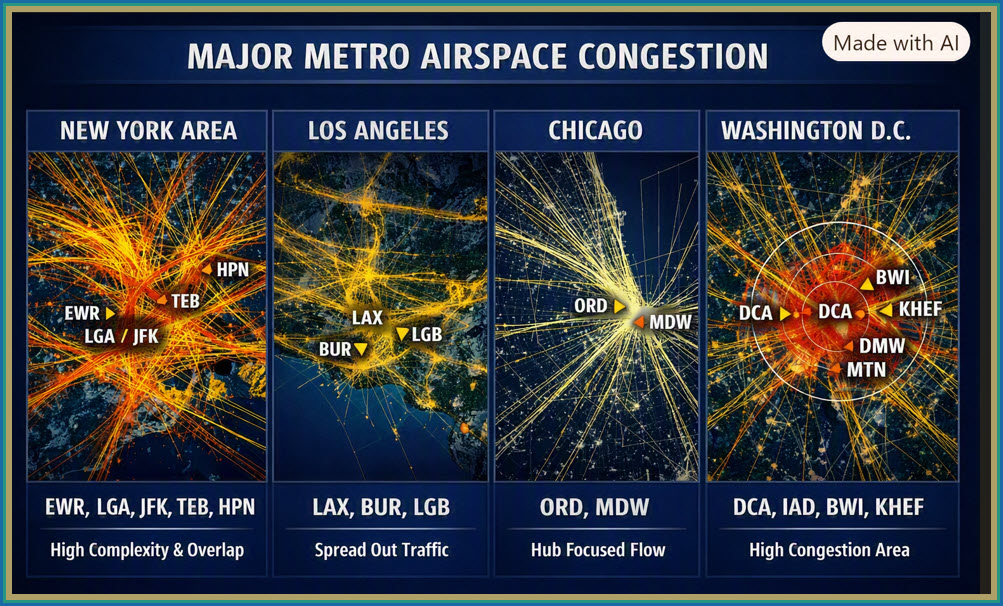
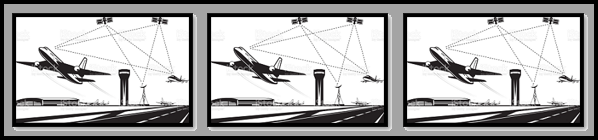
The graphic portrayal (AI generated image) is also reflective of the tight geometry-
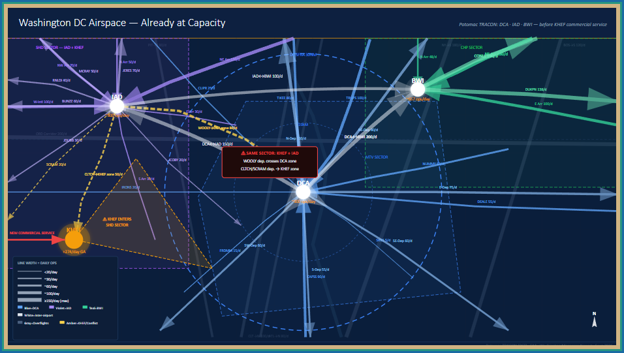
The Part 139 application points to a positive contribution to the area’s passenger demand-
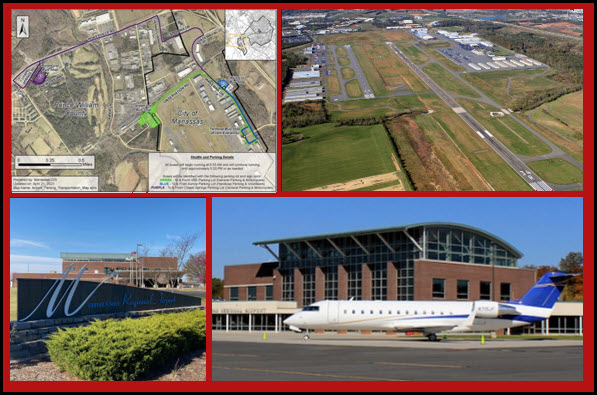
“Washington Manassas, renamed earlier this year from Manassas Regional Airport, is the busiest GA airport in Virginia, with more than 420 based aircraft and 100,000 annual operations. It is also a designated reliever for Washington Dulles International (KIAD).
After the FAA awarded a Part 139 airport operating certificate to KHEF on Monday, airport officials estimate it could accommodate up to 3 million commercial passengers annually, starting in late 2027. Assuming commercial flights average 75 passengers, that would equate to about 40,000 operations each year on top of existing private aviation and flight school activities.”
Before an already crowded airspace has new, nearby traffic, it would appear advisable to assure that the architecture of this complex airspace and it may well be that the FAA is doing exactly that without making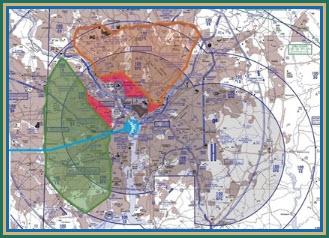 it public. Simple considerations like these may be worth analysis:
- Training‑flight density: Manassas has heavy flight‑school traffic; mixing this with commercial ops requires careful sequencing.
- Wake‑turbulence spacing: Larger commercial aircraft will require increased spacing on departure and arrival.
- Metroplex complexity: The Washington metroplex is already one of the most complex in the U.S.; adding a fourth commercial airport increases coordination load.
- Weather reroutes: In convective weather, Potomac TRACON may need to prioritize flows from IAD/DCA/BWI, temporarily constraining Manassas departures.
Manassas’ new commercial airspace needs to be thoughtfully integrated smoothly with IAD, BWI, and DCA. The region already operates under a unified FAA architecture designed for multi‑airport coordination and its structure is complex and incredibly integrated. Its role as a reliever airport, its new tower, and its modest immediate commercial scale make the interaction feasible — though not without added complexity that must be examined before this new source of traffic is ready to burgeon.
It’s time to be sure that this airspace will be able to safety and efficiently accommodate the addition. To repeat, this is not to say that the current and immediately foreseeable traffic pose a risk. Also, it is acknowledged that the FAA may well be doing exactly what is suggested herein.
After FAA certification, Washington Manassas Airport to offer commercial flights
The Federal Aviation Administration announced on Monday that the Washington Manassas Airport (KHEF) can begin offering service to certain commercial passenger airlines, opening the door to more flight opportunities for the Washington region, including Northern Virginia.
 Washington Manassas Airport, formerly Manassas Regional, will become the fourth commercial airport in the Washington region, giving travelers another choice and possibly expanding economic activity, local leaders said.
The agency said the airport is the first to receive the operating certificate in 53 years, a milestone that will be followed by a build-out of modern infrastructure and technology to enable safe, sustained commercial passenger service.
“The certificate serves as FAA’s official seal of approval, confirming that this airfield’s safety protocols, emergency response capabilities, and operational infrastructure meet the rigorous federal standards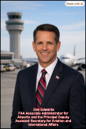 required to support regional passenger airlines,” said FAA Associate Administrator for Airports Dan Edwards[2]. “It’s a huge win for regional connectivity and for the local economy.”
Leaders from various levels of government joined Edwards for the announcement at the airport on Monday.
The FAA said the airport received its Part 139 Airport Operating Certificate after demonstrating compliance with multiple federal safety standards, including runway and taxiway pavement conditions, aircraft rescue and firefighting, emergency planning, wildlife hazard management, and personnel training.
According to the agency, the airport has also received more than $46 million in federal funds over the past five years to support critical infrastructure improvements, including runway rehabilitation, a new passenger terminal opening in fall 2027, and construction of a new air traffic control tower, which is scheduled to be completed in 2029.
Airport director Juan Rivera said the facility’s new commercial certification capped an intentionally rigorous process designed to protect passengers.
“Getting a Part 139 operating certificate is not an easy process, and quite honestly, it should not be,” Rivera said. “The requirements are rigorous for a reason. At the end of the day, this is about safety and security of our flying public, and that’s something that we take seriously here at the airport every single day.”
Greg Campbell, director of the Virginia Department of Aviation, framed the airport’s switch from general aviation to commercial service as a rare, complex, and highly significant upgrade driven by local leadership that is expected to yield major economic and connectivity benefits.
“Moving an airport from a general aviation airport to an air carrier commercial service airport with the FAA is a big deal, and I’m so glad that we could be here today,” Campbell said.
He added that the milestone makes Manassas Airport Virginia’s 10th air carrier or commercial service airport.
Rivera said he hopes the airport will celebrate its first commercial flight in November 2027, offering about three or four round-trip flights a day to vacation destinations. He did not specify which air carrier is being considered, only that it would be low-cost for travelers.
[1] PLEASE NOTE; the FAA has not announced such a study but it may have already commissioned such an analysis.
[2] also Principal Deputy Assistant Secretary for Aviation and International Affairs